
Route Guide · The Journal
Central Park Running Routes and the Foot Massage After
Eight published loops between 1.42 and 6.02 miles, the rules visitors get wrong, and the half-mile walk east to 30 minutes in a reflexology chair for $35.
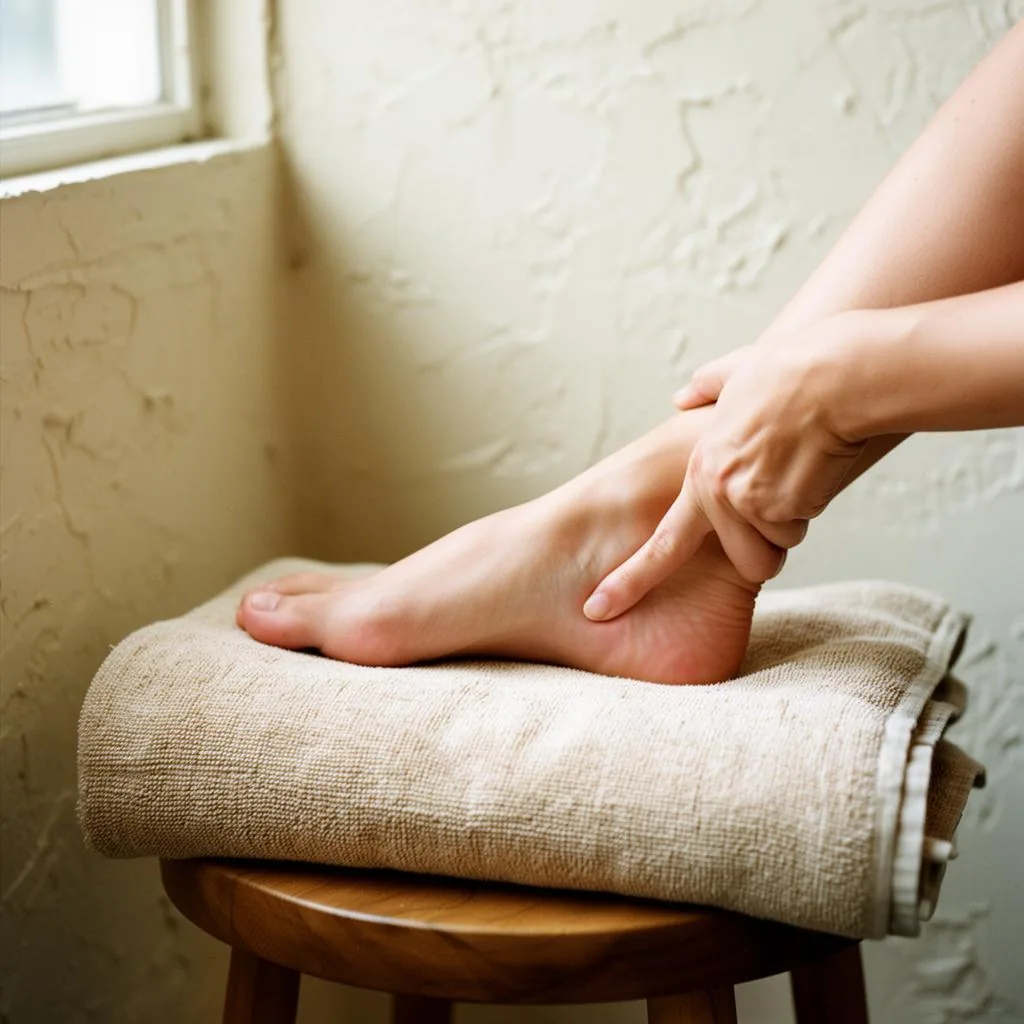
A Central Park running route is whichever of the eight published loops matches the legs you brought. They run from 1.42 miles to 6.02 miles, they all connect, and the Central Park Conservancy publishes every distance on one map. What almost nobody publishes is the other half of the run — where to put your feet up afterwards. Ours is $35 for 30 minutes, half a mile east of the southeast corner.
Every Central Park running route, by the numbers
The Drives are a closed circuit with two cross-park connectors — Terrace Drive at 72nd Street and the 102nd Street Crossing — and every standard loop is just a different combination of those. That's the whole system. Once you can picture the two crossings, you can build a run of almost any length without a map, and you can change your mind at mile two without getting lost.
5.14 mi — the two lower segments: everything south of the 102nd St Crossing.
4.92 mi — the two upper segments: everything north of Terrace Drive.
6.02 mi — all three, the full Park Drive loop.
1.66 mi — the bridle path loop, soft dirt around the Reservoir.
Here they all are, shortest first. The loop names and distances are the Conservancy's own, from its downloadable running map; the boundary descriptions are how centralpark.com writes them. The times are ours — plain arithmetic at an 8:00 to 12:00 minute mile, with nothing added for lights, water fountains or the moment you stop to look at the skyline over the Reservoir.
- Upper Loop 1.42 mi 11–17 min
North of the 102nd Street Crossing — short, and the steepest ground on the Drives.
- Reservoir Running Track 1.58 mi 13–19 min
Not on the Drives at all: crushed gravel, 86th to 96th, one-way counterclockwise.
- Bridle Path Loop 1.66 mi 13–20 min
Soft dirt around the Reservoir. The Conservancy says watch for leashed dogs and horses.
- Lower Loop 1.71 mi 14–21 min
South of Terrace Drive — the easiest paved loop, and the closest to Midtown.
- The 4.04 Loop 4.04 mi 32–48 min
The park's middle: no south end, and it stops below the north hills.
- Upper Loop 4.92 mi 39–59 min
Everything north of Terrace Drive. Long and hilly — this is the training loop.
- Lower Loop 5.14 mi 41–62 min
Everything south of the 102nd Street Crossing. A near-full loop without the north hills.
- Full Loop 6.02 mi 48–72 min
The whole Park Drive. Harder than the number looks.
Two of those names repeat, which trips people up: the Conservancy publishes both a 1.42-mile and a 4.92-mile Upper Loop, and both a 1.71-mile and a 5.14-mile Lower Loop. The short ones are single segments. The long ones are two segments joined. If somebody tells you they ran the lower loop, ask which.
The one distance everybody gets wrong
You will see the full loop called 6.1 miles constantly, including by the Conservancy, whose running guide page says 6.1 while its own downloadable map says 6.02. centralpark.com's map says 6.03. None of this is a scandal — GPS wanders under trees, and a lap measured on the left edge of the lane is shorter than one measured on the right.
There is one specific mix-up worth knowing, though. The 6.1-mile figure is also the length of the street perimeter outside the park — Central Park West, Central Park South, Fifth Avenue and 110th Street. That's a sidewalk lap, not the Park Drive. If you want a number you can say out loud without being corrected, say six miles.
The Central Park loop is exactly 6.1 miles.
The Central Park Conservancy running guide says 6.1; the Conservancy's own downloadable running map says 6.02, and centralpark.com says 6.03. The 6.1 figure is also the length of the street perimeter outside the park, which is easy to mix up. Every published figure lands between 6.02 and 6.1 — call it six miles.
The Reservoir, and the rules visitors get wrong
The Stephanie and Fred Shuman Reservoir Running Track is the one every visitor has seen in a photograph. It's 1.58 miles of crushed gravel, it spans the park from 86th to 96th Streets, and the Conservancy is explicit that it runs one direction only, counterclockwise. Turn up going the other way and you'll find out how New Yorkers feel about it within about forty seconds.
One route fact that changes how the distances feel: the north end of the park is where the climbing is, which is why the 4.92 and the 6.02 are harder than their numbers suggest and the 1.71 and the 4.04 aren't.
Everything else about actually being in the park — opening hours, which lane you belong in, where the water is in winter, how to read a lamppost to work out where you are, and which run clubs let you turn up unannounced — is on our companion page, running in Central Park. This page is the distances.
If you'd rather follow someone else's line, New York Road Runners publishes a curated Central Park route of approximately 5.0 miles that highlights the Mall and Literary Walk, Bethesda Fountain and Terrace, the Obelisk, the Fred Lebow statue and the TCS New York City Marathon finish line. NYRR mirrors it on Strava, though you'll need a free account to see the map. Don't confuse that 5.0 with the Park Drive loop — they're different runs.
Where to finish, if a foot massage is the plan
Every loop above can start and end anywhere on the Drives, which means the finish is a free choice. Make it the southeast corner. Grand Army Plaza, at Fifth Avenue between 58th and 60th Streets, is the closest park exit to Midtown East and it puts you on a flat, straight walk to the door.
On foot — 0.54 miles, about 12 minutes
From Fifth Avenue at 59th Street to 146 East 55th Street is 0.54 miles: four blocks south on Fifth, then east on 55th across Madison, Park and Lexington. Two independent pedestrian routing engines put that at 10 to 12 minutes, and roughly eight signals along the way are what decide which end of the range you land on. Budget 12 to 15 if you're walking it as a cool-down, which is what you should be doing anyway. We're on the second floor, Suite 2B, a couple of hundred feet east of Lexington.
By train
The station under the southeast corner is 5 Av/59 St, served by the N, R and W. Take the N — it's the only one of the three that runs at all hours — one stop east to Lexington Av/59 St, then walk four blocks south. Note that despite the station's name there is no entrance at the corner of Fifth Avenue and 59th Street; the stairs are at Fifth and 60th and on the Central Park South side near the Plaza.
Coming down from the Reservoir instead? Leave at 86th Street and take the 6 downtown from Lexington Av/86 St to 51 St, a two-minute walk from us. Stay on the local — the 4 and 5 run express past 51 St. The E at Lexington Av/53 St runs at all times and lands three minutes away. Full directions, with the walk from every nearby platform, are on our directions and hours page.
By taxi
Give the driver 146 East 55th Street, between Lexington and 3rd. It's a short ride and an unpredictable one — Midtown traffic makes the meter, not the distance, the interesting number. On a weekday at 6 PM the walk is often faster.
What a post-run foot massage actually does
This is where most spa pages start promising things, so here is the evidence as it stands. A 2020 systematic review in BMJ Open Sport & Exercise Medicine pooled 29 studies and just over a thousand participants and found no evidence that massage improves strength, jump, sprint, endurance or fatigue, alongside small but statistically significant improvements in flexibility and delayed-onset muscle soreness. Its own authors flag the small study sizes and the mixed protocols.
A 2017 review in Frontiers in Physiology reached a similar place from the other direction: massage after strenuous exercise could be effective for alleviating soreness, with the caveats that none of the included trials concealed allocation, few used masked assessors, and the soreness results were highly heterogeneous. Two reviews, one modest conclusion: it helps how you feel, a little, and it does not make you faster.
The National Center for Complementary and Integrative Health doesn't cover athletic recovery or post-exercise soreness at all — but its safety line is the one worth repeating: the risk of harmful effects from massage therapy appears to be low, with rare reports of serious side effects such as a blood clot, nerve injury or bone fracture, some of them involving vigorous techniques. So: comfortable pressure, and say something if it isn't.
We're a massage studio, not a clinic, and we don't diagnose or treat anything. New York State licenses massage therapists through the NYSED Office of the Professions under the title LMT, and you're welcome to ask about credentials at the desk. If you want the same treatment of the evidence for heel pain specifically, our guide to foot massage and plantar fasciitis goes through what the research does and doesn't support.
“It helps how you feel, a little, and it does not make you faster. Anyone selling you more than that is selling you something.”
Which session to book after which loop
The mistake runners make is booking 30 minutes when the calves are the actual problem. Thirty minutes is a foot session. Sixty minutes is a foot-and-leg session. Here's how we'd match the two to the loops in the table above.
| What you ran | Book | Price | Why |
|---|---|---|---|
| Reservoir or the 1.71 lower loop | 30 min foot | $35 | Soak, sole, arch, heel and toes — enough for an easy morning |
| The 4.04, on tired legs | 45 min foot | $50 | The middle option, with time to reach the calf properly |
| 5.14 or the full 6.02 | 60 min foot | $55 | Real calf and ankle work, and a second pass on whatever complained |
| Long run plus a heavy pack or desk day | 30 foot + 30 back | $60 | Feet took the pavement; shoulders took everything else |
| Race week, or the night before a flight | 90 min foot | $80 | Still less than most Midtown spas charge for an hour |
- Book
- 30 min foot
- Price
- $35
- Why
- Soak, sole, arch, heel and toes — enough for an easy morning
- Book
- 45 min foot
- Price
- $50
- Why
- The middle option, with time to reach the calf properly
- Book
- 60 min foot
- Price
- $55
- Why
- Real calf and ankle work, and a second pass on whatever complained
- Book
- 30 foot + 30 back
- Price
- $60
- Why
- Feet took the pavement; shoulders took everything else
- Book
- 90 min foot
- Price
- $80
- Why
- Still less than most Midtown spas charge for an hour
Foot Massage
A hot herbal soak first, then thumb and knuckle work through the sole, arch, heel and toes, finishing at the calf. Reflexology technique is part of every session at no extra charge, and you stay dressed with your trousers rolled to the knee.
- 30 mins Foot Massage · 30 min $35
- 45 mins Foot Massage · 45 min $50
- 60 mins Foot Massage · 60 min $55
- 90 mins Foot Massage · 90 min $80
Walk-ins welcome — Every day · 9:30 AM – 9:30 PM. 30 minutes foot plus 30 minutes back is $60; 30 minutes of back massage alone is $38.
The full list, including hot stone and the facial combinations, is on our massage prices in Midtown East page. If you're weighing what you're actually buying in that chair, reflexology vs foot massage separates the part with evidence behind it from the part that's tradition.
Heat, water and the twenty minutes after you stop
Summer running in Manhattan is its own problem, and the CDC is direct about it: people who exercise on hot days are more likely to become dehydrated and get heat-related illness. Its advice for athletes is to schedule workouts earlier or later when the temperature is cooler, start slow and build pace gradually, drink more water than usual without waiting to feel thirsty, and wear loose light-colored clothing. Its hardest line is the simplest: if you feel faint or weak, stop all activity and get somewhere cool.
On refuelling, a sports-nutrition column published by the American College of Sports Medicine notes that carbohydrate plus protein within two hours of a hard workout helps restore immune function and optimize recovery. That's a column, not a position stand, and we're not going to inflate it into one. Practically: eat something on the walk east, and there's plenty on Lexington in the 50s.
Walking the half mile out of the park is not a throwaway. It's the cool-down, and it's also the difference between arriving with cold, stiff calves and arriving with warm ones. Then get the shoes off. Feet swell across a run and across the hour after it, and a foot that's been in a tight racing shoe since 7 AM has been compressed for longer than it needed to be.
Where we are, and when to come
U Beauty & Foot Spa is at 146 East 55th Street, 2nd Floor, Suite 2B, New York, NY 10022, between Lexington and 3rd Ave in Midtown East. Second floor, up a stairway, quiet room. We're open every day from 9:30 AM to 9:30 PM, including Sunday, and walk-in massage in Midtown East is a real option here rather than a slogan. The Midtown rooms we've checked lock the door at 7 or 8 PM, and Grand Central Bodywork over on East 43rd takes appointments only.
- Morning runners — we open at 9:30 AM and the first two hours are the quietest of the day. A 7 AM loop and a 10 AM chair is a very good Saturday.
- Evening runners — 6 to 8 PM is our busiest stretch, so book before you start. Details on late sessions are on massage open late in Midtown Manhattan.
- Commuting home after — Grand Central is ten minutes down Lexington; see foot massage near Grand Central.
If you already know you're finishing in Midtown East and you want the logistics rather than the routes, the companion piece to this one is post-run massage near Central Park, which plans the last mile backwards from the door.